

Types of PPE, which hazard each protects from and how to choose and care for it.
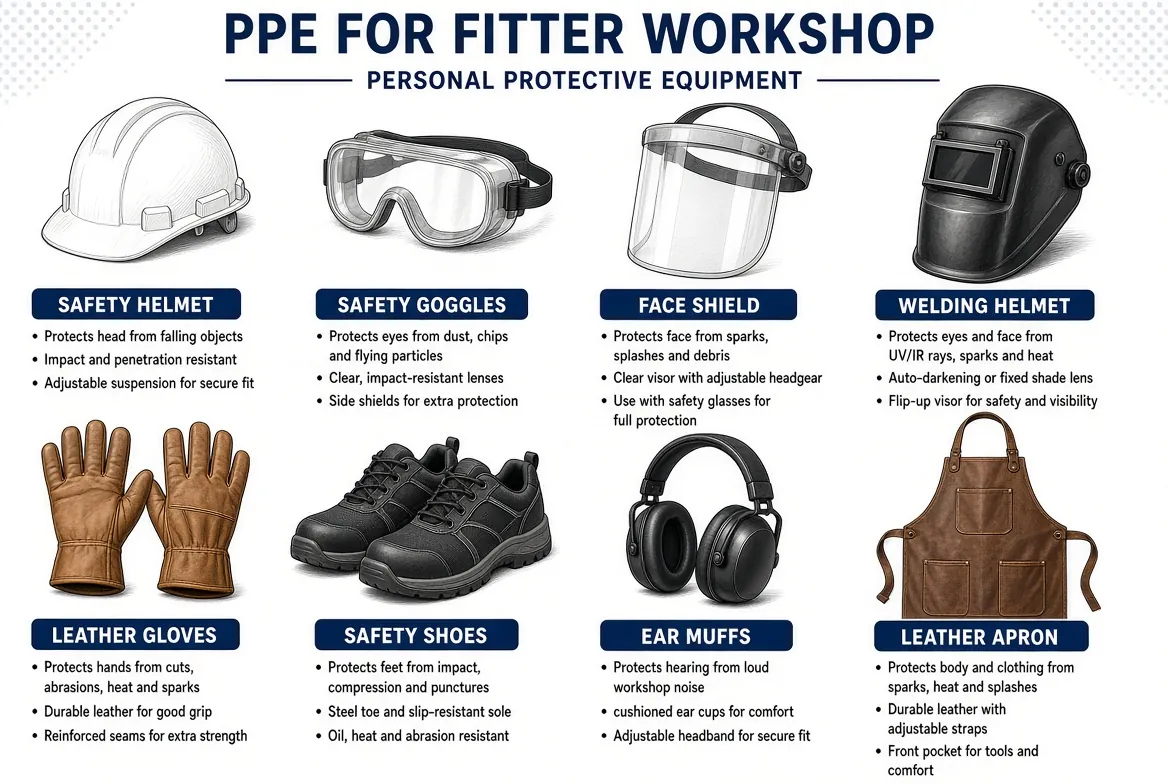
Personal Protective Equipment (PPE) is equipment worn by a worker to protect the body from hazards in the workplace. PPE is the last line of defence – first remove or control the hazard, then use PPE for the remaining risk.
Types of PPE and their use
| Body part | PPE | Protects from |
|---|---|---|
| Head | Safety helmet | Falling objects, bumping the head |
| Eyes | Safety goggles | Flying chips, grinding sparks, dust |
| Face | Face shield, welding helmet | Sparks, hot metal, arc rays |
| Ears | Ear plugs, ear muffs | High noise |
| Lungs | Dust mask, respirator | Dust, fumes, gases |
| Hands | Gloves (leather, rubber, cotton) | Cuts, heat, chemicals, electricity |
| Body | Overall, leather apron | Dirt, oil, sparks, hot metal |
| Feet | Safety shoes (steel toe) | Falling objects, sharp chips |
Never wear gloves on a rotating machine (drill, lathe). A glove can be caught and pull the hand into the machine.
Choosing PPE
- Select according to the hazard of the job.
- It must meet the standard (BIS / ISI mark) and fit the worker properly.
- It should be comfortable so that the worker actually wears it.
Care of PPE
- Inspect before use; replace damaged PPE.
- Clean after use and store in a clean, dry place.
- Use of PPE is mandatory where it is prescribed.
Quick Revision
- PPE = last line of defence.
- Goggles for eyes, ear muffs for noise, safety shoes for feet.
- No gloves on rotating machines.
- Choose PPE by hazard; it must meet standards.
Your progress is saved on this device.